
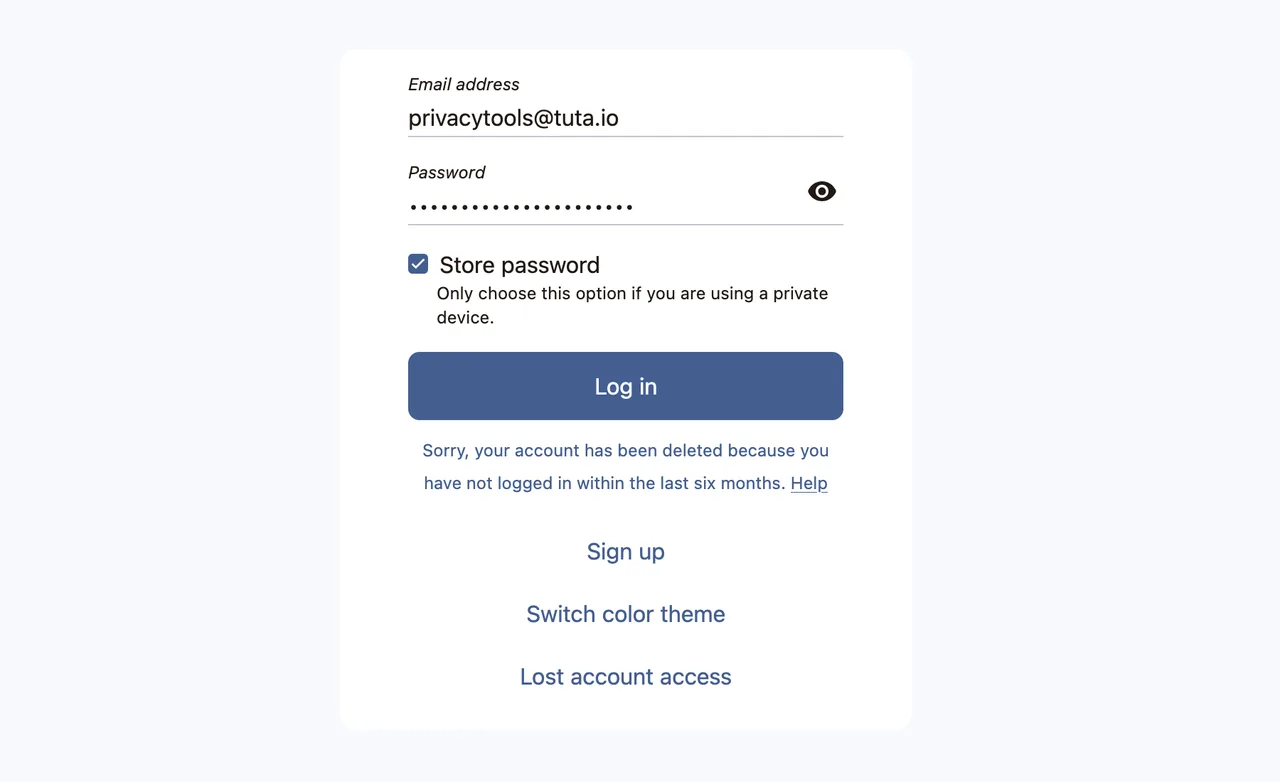
You finally did it. You left Gmail, picked a privacy-respecting inbox, and pointed a few accounts at the new address. Then life happened. A few months pass. One day you go to log in, and the account is gone, deleted for inactivity, your address along with it. For a lot of people that is the exact moment they quietly give up on privacy email and drift back to the inbox that was always just there. This is a real policy at two of the providers we recommend, and it is worth a hard look.
What actually happens
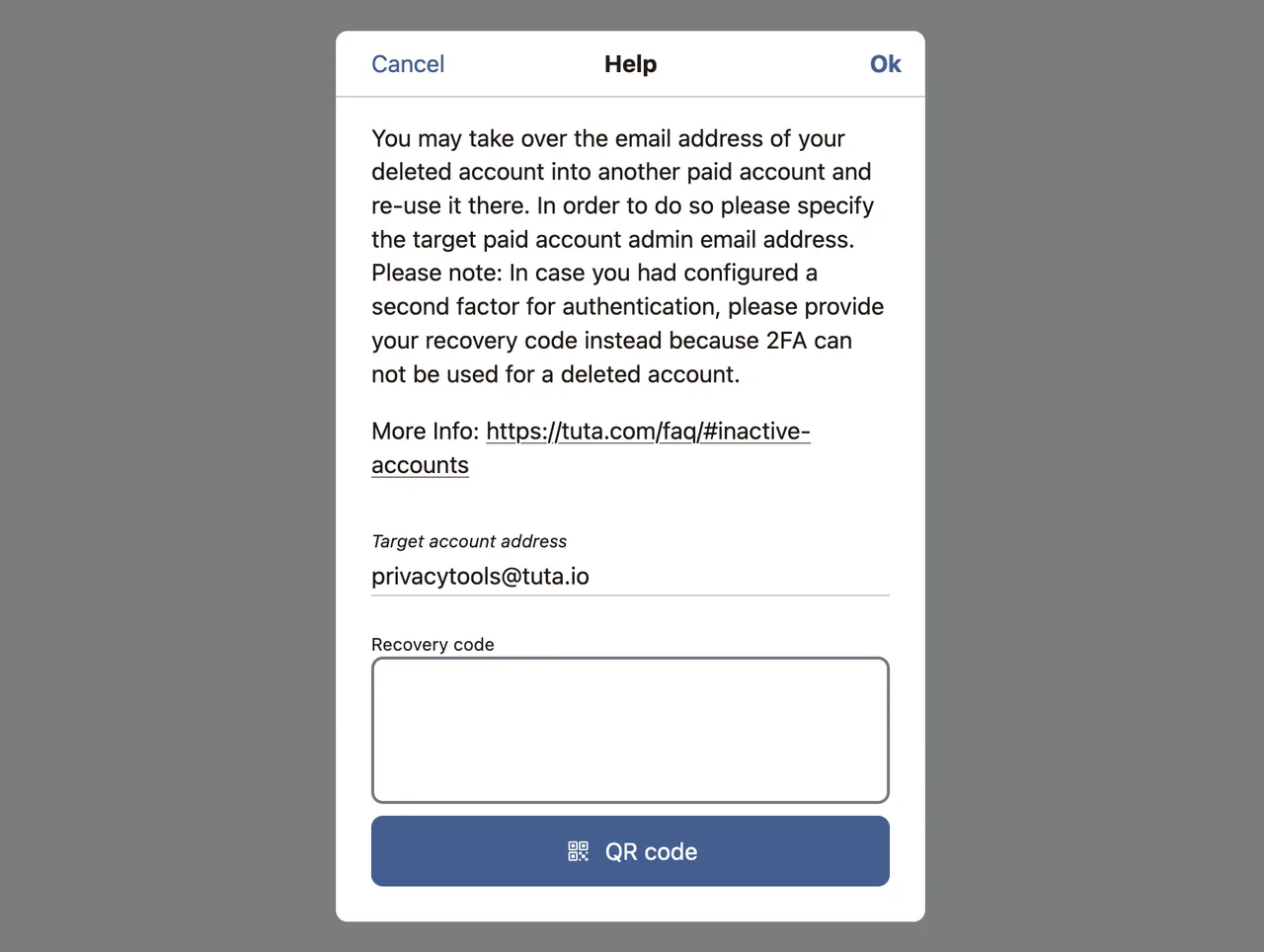
Tuta deletes a free account after six months without a login. It does not hand your address to a stranger, which is the right instinct. But you cannot get it back on a free account either. The only way to recover your own name is to take it over into a paid account, using your recovery code. In plain terms, Tuta holds your address until you pay for it:
Proton is gentler on the clock and harder at the end. A free Proton account is deleted after twelve months of no sign-in, paid accounts are exempt, and Proton at least warns you by email before it acts. But once the address is gone, it is gone. Proton generally will not recover it or reassign it to anyone, including you. The data and the name go together, permanently.
Two providers, two flavors of the same policy: a short fuse with a paywall, or a longer fuse with no way back.
The irony: this is shorter than Gmail
Here is the part that stings. Google deletes personal accounts that sit unused for two years, and it warns you over and over across that window, on your recovery phone and your backup email, and it never recycles your address to anyone else. So the privacy provider you adopted to get away from Google will, in practice, delete you faster than Google would: six months at Tuta and twelve at Proton, against two years at Google. The service that asked you to trust it turns out to have the shortest memory in the room.
Why a free, idle account is exactly the wrong thing to punish
There is a reason this lands so hard, and it is not really about the cost of storage. The person sitting on a barely-used free privacy inbox is almost always a beginner. They have not moved their whole life across yet. The privacy address is the experiment, the side inbox they check second while Gmail is still the default. Of course it goes quiet for a few months. That is what trying something new looks like.
Delete that account, and you do not just shed a freeloader. You teach a tentative convert that privacy email is fragile and unforgiving, and that the safe choice was the one they were trying to leave. Lock-in is Big Tech’s weapon. The whole pitch of the privacy alternative is the opposite: a place that respects you and will still be there tomorrow. An inbox that vanishes in six months, or charges you to undo the vanishing, breaks that promise at the worst possible moment, right when trust is still forming.
What should change
None of this means keeping dead accounts alive forever. It means meeting a new user halfway. Give people a longer runway than six months. Warn them somewhere they will actually see it, which means letting a free account add a recovery contact, because the one inbox you cannot reach is the one they have already stopped opening. State the rule plainly at signup, not in a help page they only find after the account is gone. And let people reclaim their own name without paying for the privilege. Tuta, that last one is squarely on you: charging a former free user to get their own address back is the hardest thing to defend in any of this.
If you are the user
Until any of this changes, protect yourself. If you keep a free privacy inbox you would hate to lose, sign in once in a while, even just to open a message. Store your recovery code somewhere safe, and add a recovery email if the provider allows it. And do not point anything you cannot afford to lose, like password resets or your two-factor backup, at an address you are not actively using. The goal was to leave Big Tech for good. A five-minute login now and then is what keeps that escape from quietly reversing itself.