
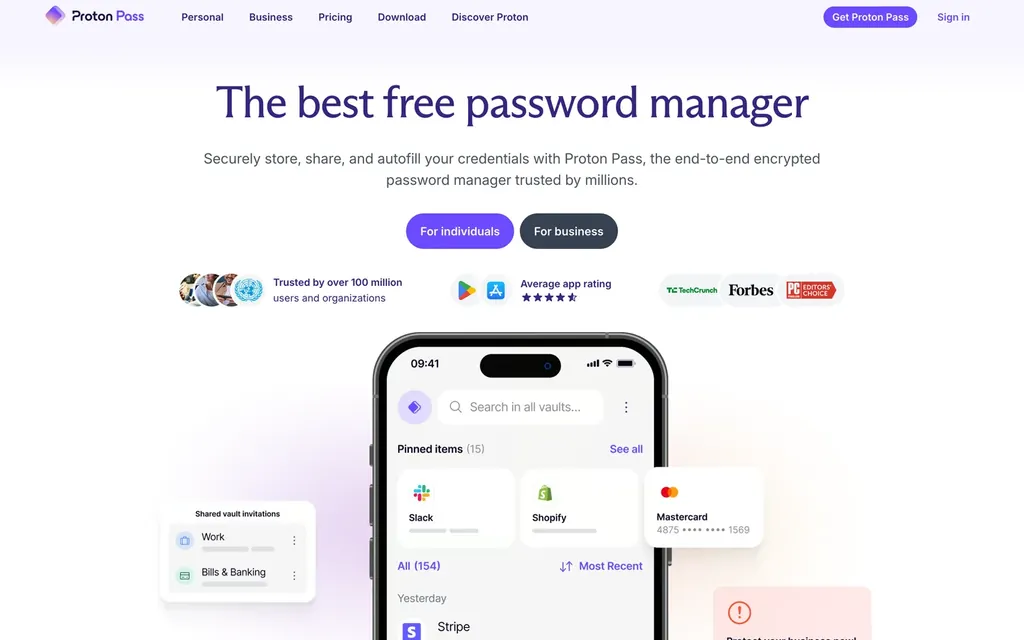
Open-source, end-to-end encrypted password manager from the maker of Proton Mail, based in Switzerland. Stores logins, notes, and cards, with built-in email aliasing via SimpleLogin. Apps for Windows, macOS, Linux, Android, iOS, and the major browsers.
Reviewed by Marco Wollank

Proton Pass
proton.me/pass 4.0 (13)
Password Managers Open Source E2E encrypted Windows macOS Linux Android iOS Browser Freemium Switzerland
Rate Proton Pass: No account needed
Threat level
Covered
A covered pick. Anyone can use it as a private drop-in, with no setup or know-how. Enough for most people. Threat levels
Our take
The pitch that lands is integration: if you already use Proton Mail or VPN, Pass slots in cleanly, and the built-in SimpleLogin aliasing lets you create a throwaway address per signup without leaving the app. The code is open and independently audited, so the privacy claims are not just marketing. The catch is that the best of it assumes you are buying into Proton broadly, and the free tier is tighter on aliases and vaults than the paid plan. Worth it if you want one trusted company for mail, VPN, and passwords; less so if you would rather not put everything under one roof.
Website at a glance
proton.me
B+ score 80
Solid website security headers
Graded by Mozilla HTTP Observatory, tested 13d ago
Inspect this site yourself
Measures the security configuration of the tool's own website, not the privacy of the product itself. A strong tool can still score low here.
Proton Pass alternatives

NordPass Audited by an independent cybersecurity firm Cure53 in Feb 2020 and confirmed the security of NordPass. Offers browser extensions for Chrome, Firefox, Edge, Brave, Opera and…

PrivacyNotes Zero-knowledge notes, tasks, files, passwords, journal, contacts and bookmarks under a single 12-word recovery phrase, with no email or password required. The full client for web, desktop and mobile is open source under AGPL-3.0. No subscription model.

KeePassXC Securely store passwords using industry standard encryption, quickly auto-type them into desktop applications, and use browser extension to log into websites. KeePassDX for…

Bitwarden Bitwarden is our top choice. You can import your previous passwords from other password managers with ease. Free for personal use. Available for Desktop, all Browsers, Android…

1Password 1Password is a commercial password manager for individuals, families, and teams, available on Windows, Mac, Linux, Android, iOS, and all major browsers. It uses a dual-key architecture combining your master password with a locally generated Secret Key.

KeePassDX KeePassDX is a lightweight, open-source KeePass-compatible password manager for Android, storing credentials in a local encrypted database file (.kdbx) with support for biometric unlock, autofill, TOTP, and passkeys.